Before laying the first brick, ask yourself how well you know the ground you’re building on? Many people overlook this and end up facing issues like cracks in walls, waterlogging, or worse—foundation failure.
Soil investigation isn’t just a technical step—it’s a crucial one. It tells you if the soil can handle the weight of your project, how deep you should lay the foundation, and what precautions to take. Without it, you’re stepping into construction with guesswork.
In this blog, we break down what soil investigation really means, the different methods used, and why it plays such a massive role in the safety and success of a building.
At Axis Surveyors, we’ve seen what happens when soil checks are skipped—and we’ve helped fix the mess, too. With more than 25 years of hands-on experience, our team uses the latest tools to give you a clear picture of your land. Precise data is delivered straight to your screen.
We don’t just survey land. We help you make informed decisions that last a lifetime. And that’s what sets Axis apart.
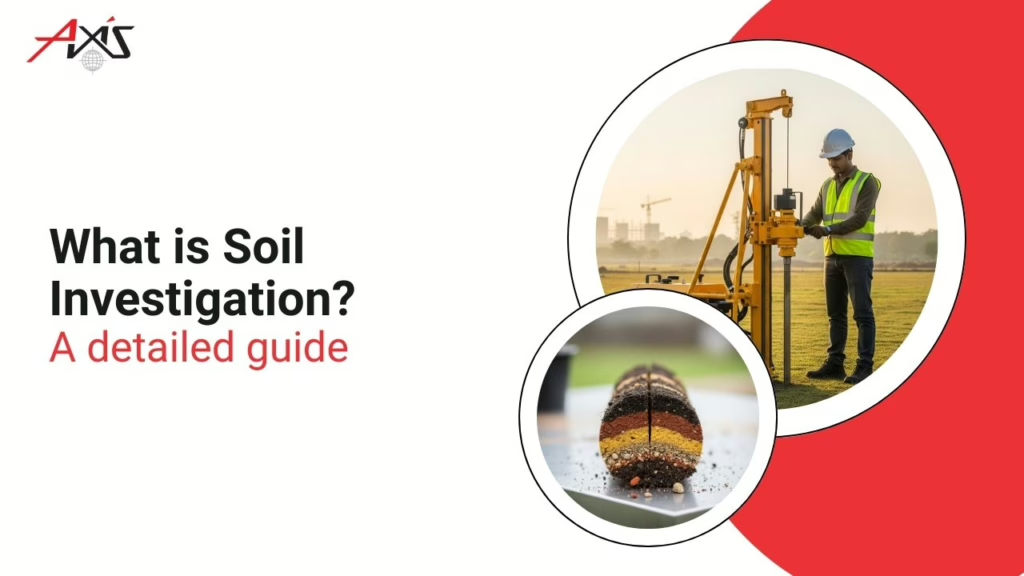
What is Soil Investigation?
When you plan to build a house, a school, or an office, there’s one big question before you even think about laying the foundation. Can the ground handle it? That’s where soil investigation comes in.
In simple words, soil investigation is the process of checking what’s beneath the surface. Not all soil is the same; some areas are rocky, others are too soft or sandy. Building without checking leads to cracks, sinking floors, or major structural damage later on.
Here’s how it works, step by step:
- Site Visit – Expert professionals visit the construction site and study about the location, layout, and surroundings.
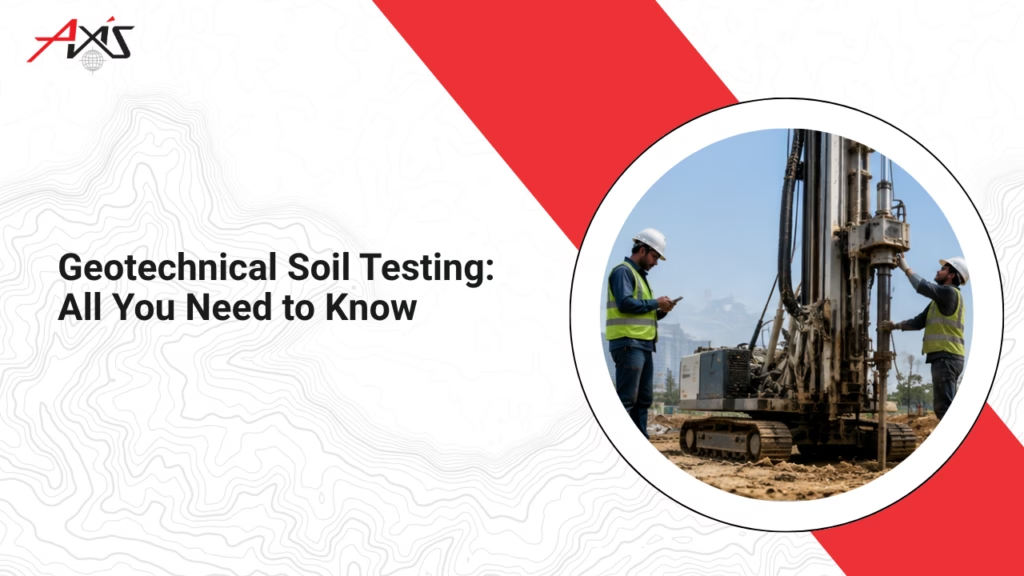
- Soil Sampling – They drill small holes are drilled into the ground and collect soil samples from different depths.
- Lab Testing – The samples are taken to a lab and tested for properties like moisture content, density, strength, and how the soil reacts to pressure.
- Analysis – The results are thoroughly studies to determine whether the soil can safely carry the weight of the planned structure.
- Reporting – A detailed report with all findings and suggestions is generated to help builders make smart and safe decisions.
Soil may look simple on the surface, but a lot is going on underneath. Soil investigation helps uncover the truth.
The goal? To figure out:
- How much weight can the ground handle without sinking or cracking?
- What kind of soil is present—clay, sand, silt? Because they all behave differently
- How wet the soil is, and whether it holds or drains water well?
- Is there a high water table? It can affect basements or underground structures
- Find out any hidden risks, like unstable or contaminated soil
- And finally, to meet building rules and approvals—many areas won’t even let you build without this check
Why Soil Investigation Matters Before You Build?
Soil investigation enables you to know the plot well before you start building. If you skip it, you might end up with surprises you don’t want—just like sinking floors, leaky basements, or walls full of cracks.
Here’s the gist, in plain talk:
- Money-Saver: Finding trouble in advance—like soggy spots or weak patches—means you won’t have to tear things down later.
- Fit-for-Purpose: Clay behaves one way. Sand another. If you don’t test, you’re guessing how to build.
- Water Worries: Too much moisture can make soil swell or shift. Soil investigation can illuminate all these aspects and guide you regarding where to drain, waterproof, or reinforce.
- Hidden Hazards: Loose layers, landslide risk, or even old fill dirt can lurk underground. Soil investigation from a professional team can help you prevent nasty shocks.
- Rule-Following: Most cities insist on a geotech report before signing off on plans. No report, no permit.
At Axis Surveyors, we’ve spent 25+ years asking the right questions on the ground. We collect samples, run tests, and hand you clear advice—so you can build safely, smartly, and without drama.
Soil Investigation Methods – Knowing the Ground You Build On
Before starting construction, it’s important to understand what’s under your feet. Is the ground firm enough? Will it hold up during rain? Soil investigation helps answer all this.
Here are the main ways experts check soil conditions:
1. Simple Site Check
It all starts with a walk around the site.
Engineers look for:
- Wet patches or water seepage
- Cracks, uneven ground, or erosion
- Vegetation patterns
- This helps spot areas that might need deeper testing.
2. Test Pits & Trenches
Shallow pits (about 4–6 meters deep) are dug using machines or by hand.
- Soil layers are visible.
- Samples are taken for lab tests.
- This method works well in clayey or firm soils.
3. Boring Methods
Need to go deeper? Boring does the job.
- Auger Boring – Like a giant corkscrew for soft soils
- Wash Boring – Uses water to loosen and remove soil
- Rotary Drilling – Cuts through hard soil and even rock
- These methods help collect samples without disturbing the natural soil structure.
4. In-Situ Tests
These tests are done on-site, giving real-time results.
- SPT (Standard Penetration Test): A tube is hammered into the ground to see how tough the soil is.
- CPT (Cone Penetration Test): A cone is pushed into the ground to measure resistance.
- They help find out how much load the soil can handle.
5. Lab Tests
Collected soil is tested for:
- Plasticity (Atterberg Limits) – Helps understand if the soil will swell or shrink.
- Compaction – Finds the best moisture level for compacting the soil.
Soil investigation is like checking a house before buying it. You don’t see everything from the outside. A little digging, testing, and observing can save much trouble later.
How Can Axis Help?
Have a building idea but not sure about the ground beneath? Axis Surveyors steps in right there. We bring clarity to your site—whether it’s a new home, a road, or a school—using digital surveys and soil tests. No guesswork. Just reliable data, quickly sent to you.
About the Company
Axis Surveyors isn’t your typical surveyor. We’re a close-knit team of young professionals who really care about your project. For 25 years, we’ve combined passion with precision. Every job starts with understanding what you need—then we pick the right tools (from total stations to borehole drills) to get the answers.
Why Choose Us?
- We’ve done this for 25 years—and learned every trick.
- Our crew loves what they do and treats your land like their own.
- We use top-notch tech, so the results are spot-on.
- You get clear advice, not confusing charts.
- From start to finish, we handle it all.
Years of Experience
A quarter-century might sound long, but in surveying, it’s gold. We’ve seen clay, sand, rock—you name it. That know‑how makes the difference between a shaky foundation and a rock‑solid one.
Projects Completed
Over 4,000 sites were surveyed. From tiny plots to highways, we’ve helped clients dodge surprises—like waterlogged soil or hidden debris—and saved them time and money.
Your building deserves a strong start. With Axis Surveyors, you get a team that’s precise, prompt, and genuinely invested in your success. It’s just solid ground and peace of mind.
FAQs
A. Land contours, soil strength, underground utilities—you name it. If it’s on your site, we will check it.
A. Small plots can be done in a day. Bigger sites may take a few days. Then we turn around the report fast.
A. Absolutely. You get digital maps, charts, even photos—whatever helps you make decisions.
A. We’ll guide you on geo tech reports for local permits, yes.
A. Kottayam, Kerala—right opposite the Municipal Children’s Park.
Ready to Dig Deeper?
Call +91 94462 00979
Email axisurveyors@gmail.com
Visit Opp. Municipal Children’s Park, Collectorate P.O., Kottayam – 686002