Every building starts with a plan. But before the architect’s drawings, before the concrete, before the first pillar goes up, there’s one thing that needs to be understood properly—the ground itself.
It sounds simple. Soil is just soil, right? Not really.
Two plots sitting next to each other can have completely different soil conditions. One may safely support a building, while the other may need a different type of foundation. That’s why geotechnical soil testing isn’t just another box to tick before construction. It tells you what you’re actually building on.
Many people only hear about soil testing when someone asks for it during the approval process. They don’t really know what happens during the test, why engineers insist on it, or how it can prevent costly problems later.
Here, we shall break it down in simple words—what geotechnical soil testing is, why it matters, when you need it, and how it helps you make better construction decisions. At Axis Digital Land Survey Consultancy, Kottayam, geotechnical soil investigation is one of the services we provide to help homeowners, builders, and developers start their projects on the right foundation.
What Is Geotechnical Soil Testing?
Imagine you’ve found the perfect plot. The location is good. The design is ready. You’re excited to get construction started. But there’s one thing nobody can see just by looking at the land.
What’s happening underneath?
The soil below the surface could be hard and stable. It could also be loose, filled with clay, hold too much water, or have layers that behave very differently when the weight of a building comes on them. From the outside, you can’t tell.
That’s exactly what geotechnical soil testing is meant to find out.
In simple words, it’s a detailed study of the ground before construction begins. Engineers don’t just collect a handful of soil and call it a test. They investigate the site, take samples from different depths, carry out field and laboratory tests, and study how the soil is likely to behave once the building starts carrying weight.
The information they collect helps answer some very important questions.
- Can this soil safely support the building?
- What type of foundation will work best here?
- Is there groundwater that could affect construction?
- Will the soil settle or shift over time?
These answers become the starting point for engineers and structural designers. Instead of making assumptions, they’re working with actual information from your site.
The kind of testing also depends on what you’re planning to build. A single house and a high-rise building won’t need the same investigation. Even two plots in the same area may need different tests because the soil underneath can change from one location to another.
Depending on the site, engineers may use one or more of these methods:
- Test pits – This is probably the easiest to imagine. A pit is dug so engineers can actually see the soil layers near the surface. It’s often enough for smaller projects where deep investigation isn’t required.
- Trenching – Instead of digging one pit, a long trench is opened across part of the site. Why? Because soil doesn’t always stay the same across the entire property. One end of your plot could have different conditions from the other.
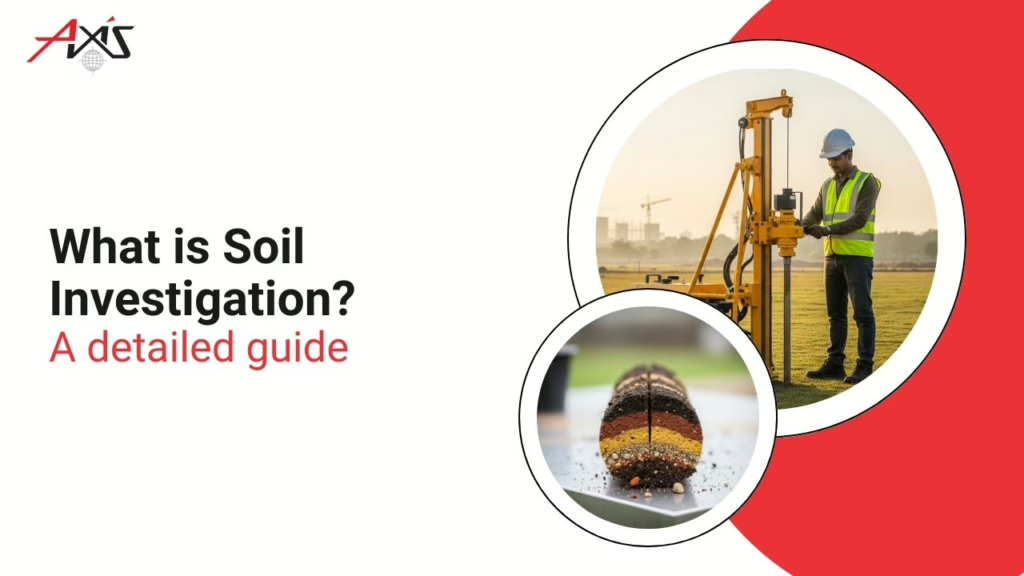
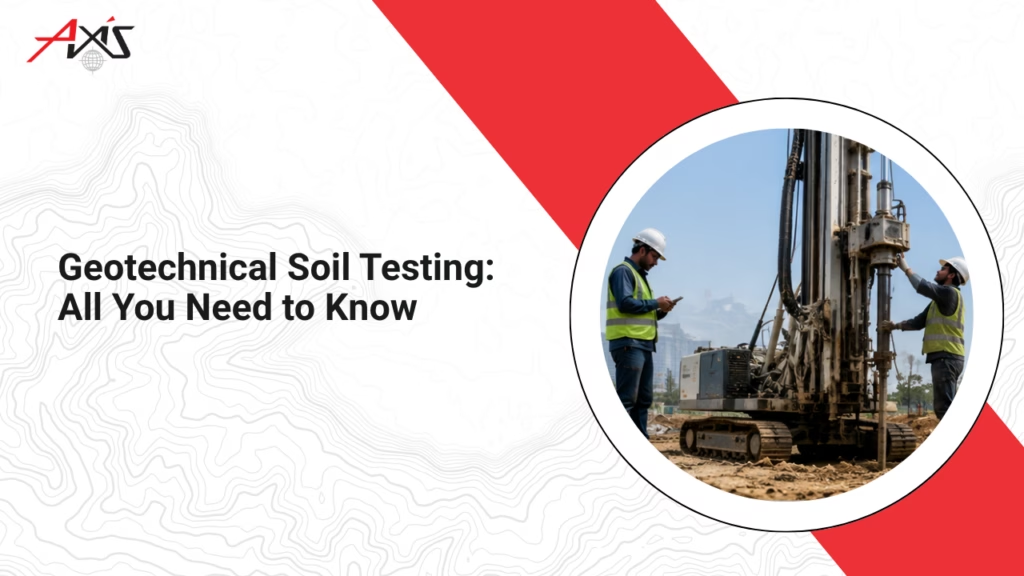
- Boreholes (Boring) – For bigger or more complex projects, engineers need to know what’s happening much deeper underground. A drilling rig collects soil samples from different depths, helping them study each layer and even check groundwater levels if needed.
- In-situ testing – Sometimes removing soil isn’t enough. Engineers test the ground exactly where it is using specialized equipment. This gives a better idea of how the soil will actually behave under the weight of a structure.
Not every site needs all these tests. The idea isn’t to do more testing—it’s to do the right testing. That’s what gives engineers the information they need to design a safe foundation instead of relying on assumptions.
Why Is Geotechnical Soil Testing Important?
Let’s ask a simple question.
If you’re spending lakhs—or maybe even crores—on construction, would you want to make foundation decisions based on assumptions?
Probably not.
That’s exactly why geotechnical soil testing becomes important.
It helps you get the foundation right
Paint can be changed. Tiles can be replaced. Even the floor plan can be modified halfway through. But the foundation? Once it’s done, changing it isn’t simple. That’s why engineers want to understand the soil before anything permanent begins.
It reveals what you can’t see on the surface
This surprises a lot of people. Two empty plots can look almost identical from the outside. Underneath, though, they can tell completely different stories. One may have firm soil just below the surface. Another may have loose layers or groundwater that changes the way the foundation has to be designed.
It helps identify risks before construction begins
People sometimes get nervous when they hear “soil investigation. If something needs attention, it is always better to know before construction starts than after the building is standing.
It gives engineers the information they need
Architects design. Structural engineers calculate. Contractors build. But all of them need one thing first—reliable information about the site. Soil testing gives them that starting point.
It helps you build with confidence
When everyone knows what they’re dealing with, decisions become easier. You move ahead knowing the foundation has been planned for your site, not based on guesswork or what worked somewhere else.
Want to know more about how soil testing can help your construction?
How Does Geotechnical Engineering Investigate Soil?
How do engineers actually figure out what’s happening under the ground?
It’s not as simple as taking a handful of soil and sending it to a lab.
The first thing they want to understand is the project itself. Are you building a house? An apartment? A commercial building? Because the kind of investigation depends on what the ground will eventually have to support.
From there, they start collecting information from the site. Sometimes that means digging. Sometimes it means drilling much deeper into the ground. The goal is always the same—to understand what the different soil layers look like and how they’ll behave once the building starts putting weight on them.
The soil samples they collect then go through different tests. Engineers aren’t just looking at the color or texture. They’re trying to answer practical questions.
- How strong is this soil?
- Does it hold too much water?
- Will it compress under load?
- Is it likely to settle over time?
Another interesting thing: not all soil samples are treated the same.
Whenever possible, engineers try to collect what’s called an undisturbed sample. Think of it as a sample that’s been removed very carefully without changing its natural condition too much. That gives a much clearer picture of how the ground actually behaves.
Other samples get disturbed during drilling or while they’re being brought to the surface. That sounds like a problem, but it isn’t always. These samples are still useful. Engineers often compare both types to understand the site better instead of depending on just one result.
And then comes the part most people never see.
The laboratory results by themselves don’t decide anything. They still need to be interpreted. That’s where the experience of a geotechnical engineer matters. Numbers on a report are one thing. Understanding what those numbers mean for your site and your building is something else altogether.
By the end of the investigation, the idea isn’t simply to say, “Here’s your soil report.” It’s to answer a much more important question:
Can this land safely support what you’re planning to build?
How Can Axis Digital Land Survey Consultancy Help?
Choosing the right team matters as much as deciding to do the investigation.
At Axis Digital Land Survey Consultancy, Kottayam, we’ve spent more than 25 years helping homeowners, builders, architects, and developers understand the ground they’re building on. Every site is different, which is why we focus on providing accurate information you can use while planning your project.
Here’s what you can expect from us.
- More than 25 years of experience in land surveying and geological investigations.
- Complete geotechnical soil investigation for residential, commercial, and industrial projects.
- Modern equipment and advanced investigation techniques for accurate soil analysis.
- Detailed reports that support foundation design and construction planning.
- Experienced professionals who understand local site conditions and project requirements.
- Timely service so your project can move ahead without unnecessary delays.
Planning to build? Get your site investigated by the experienced team at Axis Digital Land Survey Consultancy and start your project with confidence.
The soil beneath your site plays a major role in how your building is planned and constructed. Geotechnical soil testing helps you understand that ground before making important decisions.
It is not just a test or a report. It is the information that helps engineers, builders, and property owners move forward with more clarity.
With over 25 years of experience, Axis Digital Land Survey Consultancy helps clients understand their land better through accurate geotechnical investigation and digital land surveying services.
Frequently Asked Questions
A. Before construction starts, engineers need to know whether the soil can support the planned structure. Soil testing helps understand the ground conditions and plan the right foundation.
A. Not necessarily. The requirement depends on the type of project and site conditions. Even residential buildings can benefit from understanding the soil before construction begins.
A. A soil investigation report provides details about soil properties, strength, groundwater conditions, and other factors that help in foundation and construction planning.
A. With years of experience and modern investigation techniques, Axis Digital helps clients get accurate site information and reliable reports for better construction decisions.